Exosome Therapy for Hair Loss: A Real 3-Month Result and an Honest Look at the Evidence
What exosome therapy for hair loss involves, a genuine 3-month before and after from our Rawalpindi clinic, where the evidence currently stands, and who actually responds.
Published 08/08/2026 • 9 min read
Interesting fact
Exosomes are not cells. They are extracellular vesicles roughly 30 to 150 nanometres across that cells release to send growth factors, proteins, and genetic messages to neighbouring cells. Their use in hair restoration is an active research area rather than a settled one, and the US FDA has issued a public safety notification reminding patients that exosome products are not FDA-approved and are not interchangeable with licensed therapies.
Source: US FDA public safety notification on exosome productsOne documented case from our clinic
All three photographs below are of the same patient, taken at our Rawalpindi clinic. They are our own images, not stock photography. One is the baseline taken before treatment; the other two are follow-up views at three months, photographed from different angles at the same visit.
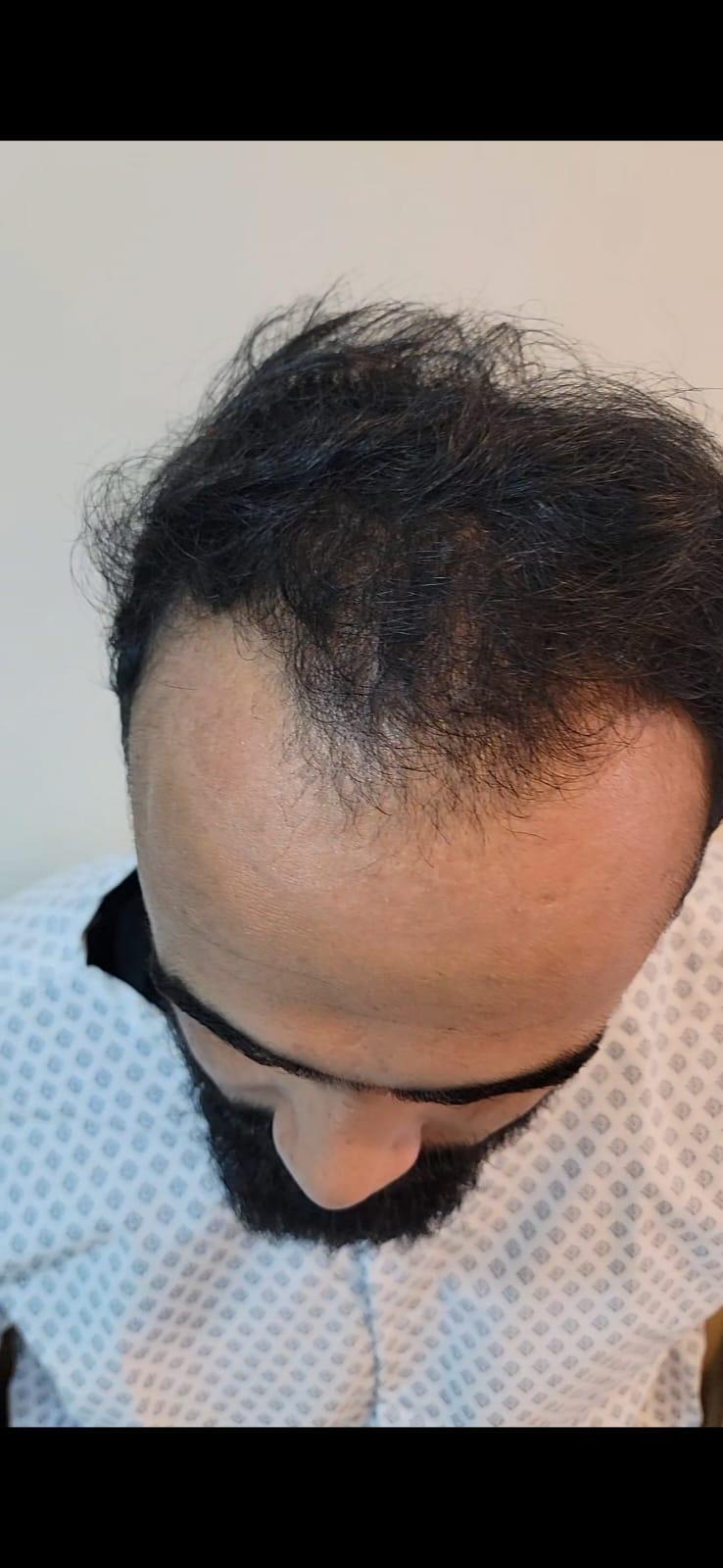 Before
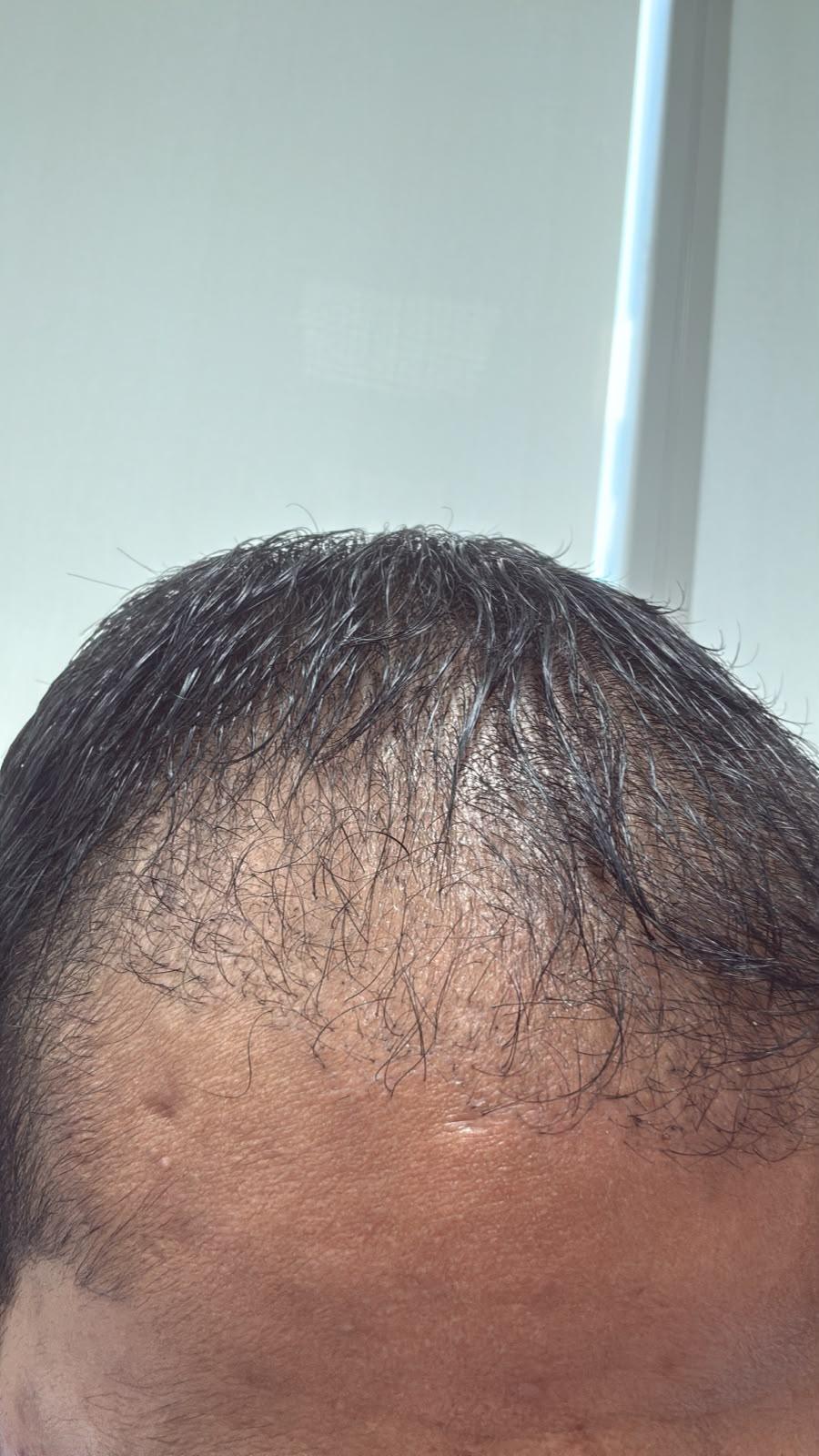 After
After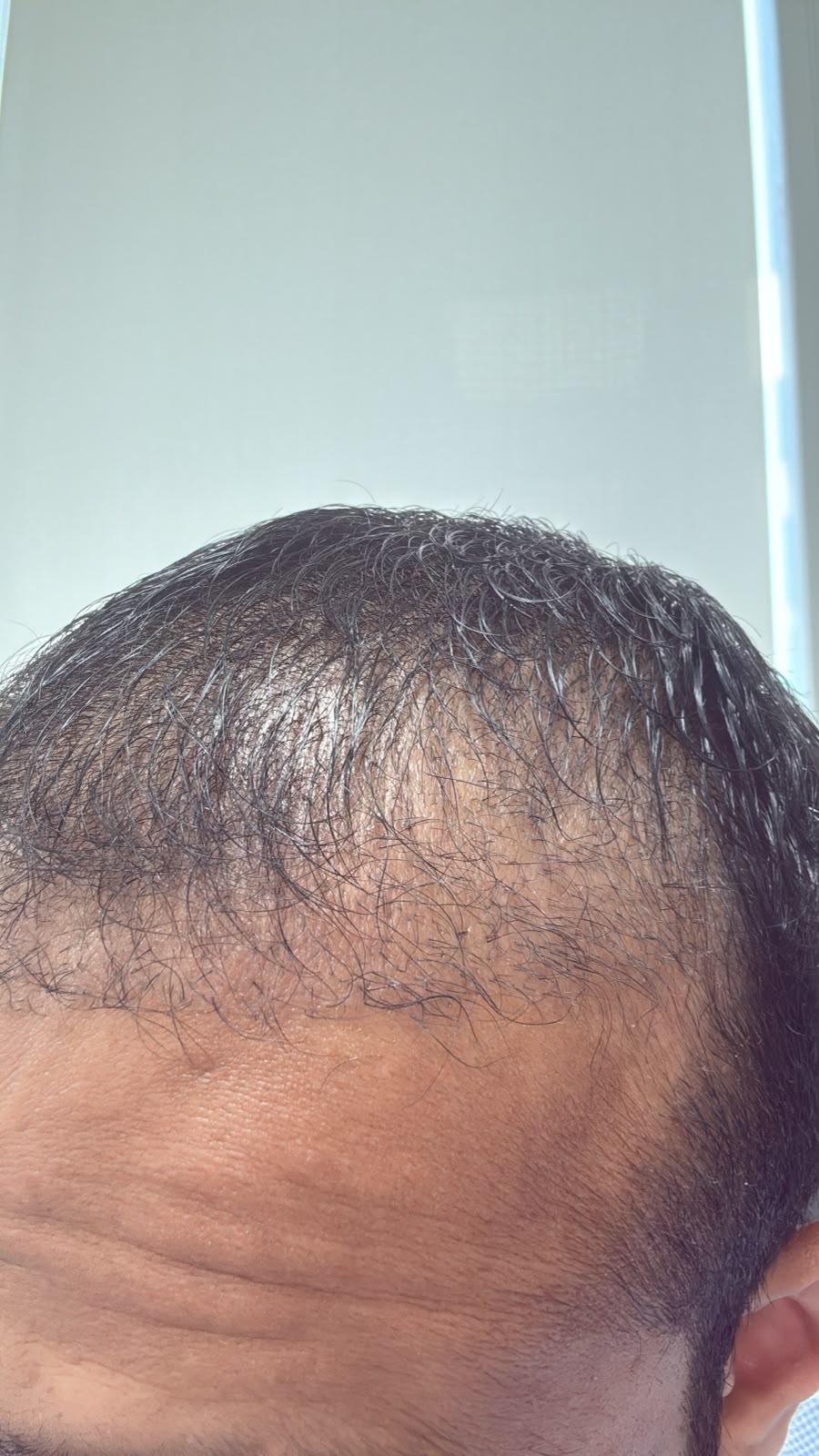 After
AfterIndividual results vary. Response depends on the stage of hair loss, underlying medical causes, and adherence to the full plan. Photographs are published with patient consent and are not retouched or colour-adjusted. A single case is not evidence of a typical outcome.
Why we are showing this case, and what it does not prove
Hair loss marketing in Pakistan is full of dramatic claims and borrowed photographs. We would rather start with what we can actually document: one of our own patients, photographed in our own clinic, before treatment and again at three months.
We also have to be straight about the limits of these particular photographs. The baseline was taken from above with the head lowered and the hair dry. The follow-ups were taken from the front with the hair damp. Different angle, different lighting, different hair condition, so this is documentation of one patient over time rather than a controlled comparison. Damp hair in particular separates into strands and lets more scalp show through, which works against the follow-up images rather than for them.
Read honestly, the three-month change here is modest: the frontal zone holds more hair and the hairline edge is less ragged, but nobody should look at this and expect a transformation. That is the realistic shape of a three-month response to regenerative scalp therapy, and we would rather publish a modest real result than a spectacular borrowed one.
This case is also the reason our photography protocol changed. Standardised images at baseline, same angle, same lighting, same dry styled hair, are now taken at the first visit for every hair patient, because without them you end up arguing about a memory instead of reading a result.
What exosome therapy actually is
Exosomes are extracellular vesicles released by cells to communicate with other cells. They carry growth factors, signalling proteins, lipids, and genetic material, and they are best understood as messengers rather than as a drug or a cell transplant.
In hair restoration, an exosome preparation is applied to the scalp and delivered into the skin, most often immediately after microneedling or by fine mesotherapy injections into the affected areas. The intention is to influence the environment around the hair follicle: signalling that supports the growth phase of the hair cycle, improves the local blood supply, and reduces the inflammation around miniaturising follicles.
A session takes roughly thirty to forty-five minutes including numbing. Patients typically describe pressure and pinpricks rather than significant pain, and most return to normal routine the same day with a mildly tender scalp overnight.
Where the evidence currently stands
This is where honesty matters more than enthusiasm. Published clinical evidence for exosome therapy in hair loss is early: mostly small studies, varied preparations, short follow-up, and inconsistent outcome measures. A 2025 systematic review of clinical evidence across alopecia types found encouraging signals for hair density and thickness while explicitly noting the heterogeneity of products and the need for larger controlled trials.
Regulatory status matters as well. The US FDA has issued a public safety notification stating that exosome products are not FDA-approved and warning patients about unapproved regenerative claims. That does not make the treatment useless, but it does mean any clinic presenting exosome therapy as a proven cure is going beyond what the current literature supports.
Our position is straightforward: exosome therapy is a reasonable adjunct in selected patients, and it is offered as part of a plan alongside established treatments rather than as a replacement for them.
Who tends to respond
The best responders are patients with early to moderate androgenetic alopecia who still have visible miniaturised hairs in the thinning zone. Where follicles are miniaturising but still present, there is something to stimulate. Where the scalp has been smooth and shiny for years, the follicles are gone and no injectable will bring them back.
Patients recovering from telogen effluvium, the diffuse shedding that follows illness, surgery, severe stress, rapid weight loss, or childbirth, often do well because the underlying follicles are healthy and the problem is a disrupted cycle.
It is also used as supportive therapy around hair transplant surgery, and in patients who have plateaued on medical therapy alone. It is not appropriate as the primary treatment for scarring alopecias, which need a medical diagnosis and anti-inflammatory management first.
Blood work before needles
Hair loss is frequently a symptom rather than a diagnosis, and treating the scalp while ignoring the cause wastes both money and months. Before starting a course, we assess for the common reversible contributors: iron deficiency using ferritin rather than haemoglobin alone, thyroid dysfunction, vitamin D deficiency, and, in women, the hormonal patterns associated with polycystic ovary syndrome.
Iron deficiency in particular is common among women in Pakistan and is one of the most frequently missed causes of persistent hair shedding. Correcting ferritin can change the trajectory of hair loss on its own, and it also improves the response to anything done procedurally.
If a treatable medical cause is found, it is corrected in parallel. Procedures work better on a scalp that is not fighting a deficiency.
What a realistic timeline looks like
A typical course is three to four sessions spaced about four weeks apart, followed by reassessment and, in responders, maintenance sessions a few times a year.
Month one usually shows nothing visible, and some patients notice a brief increase in shedding as follicles synchronise into a new cycle. This is expected and is not a sign the treatment has failed. Month two to three is where reduced shedding and short new hairs typically appear, which is the stage the photographs above were taken at, and it is usually a subtle change rather than an obvious one. Month four to six is where density change becomes visible to other people rather than only under clinic lighting.
Hair grows at roughly one centimetre a month. Any protocol promising visible density in two weeks is describing something other than hair biology.
What exosome therapy will not do
It will not regrow hair on a completely bald scalp where follicles are no longer present. It will not stop androgenetic alopecia permanently, because the underlying hormonal sensitivity of the follicles remains, which is why maintenance is part of the plan. It is also not a like-for-like substitute for medical therapy such as topical minoxidil or, in appropriate male patients under medical supervision, oral treatment.
Where hair loss is advanced and the donor area is good, a hair transplant remains the definitive option, and regenerative therapy is best used to support the surrounding native hair rather than to avoid a decision that has already become obvious.
At Ayra Aesthetics & Dental Lounge, hair consultations begin with an assessment of the pattern and stage of loss, relevant blood work, and a written plan that states which parts of the plan are established therapy and which are adjunctive.
How we document results from now on
Standardised photography at baseline, at each review, and at the end of a course, taken in the same room, at the same distance, in the same lighting, with the hair parted the same way. Without that discipline, comparisons are meaningless and both patient and clinician end up arguing about a memory.
Every published photograph carries written consent, and we do not publish images of patients who prefer to stay private. We are also planning short educational videos from our dermatology and aesthetics team so that treatment explanations come directly from the doctors performing them.
If you are dealing with hair fall and want an assessment rather than a package, book a consultation or message us on WhatsApp and we will tell you honestly whether you are the kind of patient this treatment helps.
Book a consultation
Need a personalized treatment plan? Talk to our team and get guidance based on your skin or dental goals.
Frequently asked questions
How is exosome therapy different from PRP for hair?
PRP is prepared from your own blood on the day of treatment and concentrates your own platelet growth factors. Exosome preparations are laboratory-derived vesicles applied to the scalp. PRP has a longer clinical track record, while exosome evidence is newer and still developing. Some plans use them in sequence rather than choosing one.
How many sessions are needed and how soon will I see results?
A typical course is three to four sessions about four weeks apart. Reduced shedding and short new hairs are usually the first signs at two to three months, and visible density change is judged at four to six months.
Is exosome therapy painful, and is there downtime?
Numbing cream is applied first and most patients describe pressure and pinpricks rather than pain. The scalp can feel tender for a day and you are advised not to wash the hair for the rest of the day, but there is no real downtime.
Will it work if I am completely bald in that area?
No. Regenerative scalp therapy stimulates follicles that still exist. If an area has been smooth for years, the follicles are gone and a hair transplant is the appropriate option to discuss.
Do I need blood tests before starting?
We recommend it. Ferritin, thyroid function, and vitamin D are checked as a minimum, along with hormonal assessment in women where indicated, because correcting a reversible cause often changes the outcome more than any procedure.
Sources
- Clinical, Cosmetic and Investigational Dermatology (2025): systematic review of exosomes in hair regeneration
- Journal of Bioscience and Bioengineering (2024): exosomes for hair growth and regeneration
- US FDA: public safety notification on exosome products
- StatPearls / NCBI Bookshelf: androgenetic alopecia
Related Articles
9 min read
CO2 Fractional Laser in Rawalpindi & Islamabad: What It Treats, Real Downtime, and Who It Suits
Our CO2 fractional laser is now installed at Ayra Aesthetics. Here is what fractional CO2 resurfacing treats, the day-by-day recovery, and how it is used safely on South Asian skin tones.
9 min read
Acne Scars: How to Match the Right Treatment to Your Scar Type
Icepick, boxcar, rolling, or just dark marks? A practical guide to identifying your acne scar type and matching it to the treatment that actually works for it.