CO2 Fractional Laser in Rawalpindi & Islamabad: What It Treats, Real Downtime, and Who It Suits
Our CO2 fractional laser is now installed at Ayra Aesthetics. Here is what fractional CO2 resurfacing treats, the day-by-day recovery, and how it is used safely on South Asian skin tones.
Published 09/08/2026 • 9 min read
Interesting fact
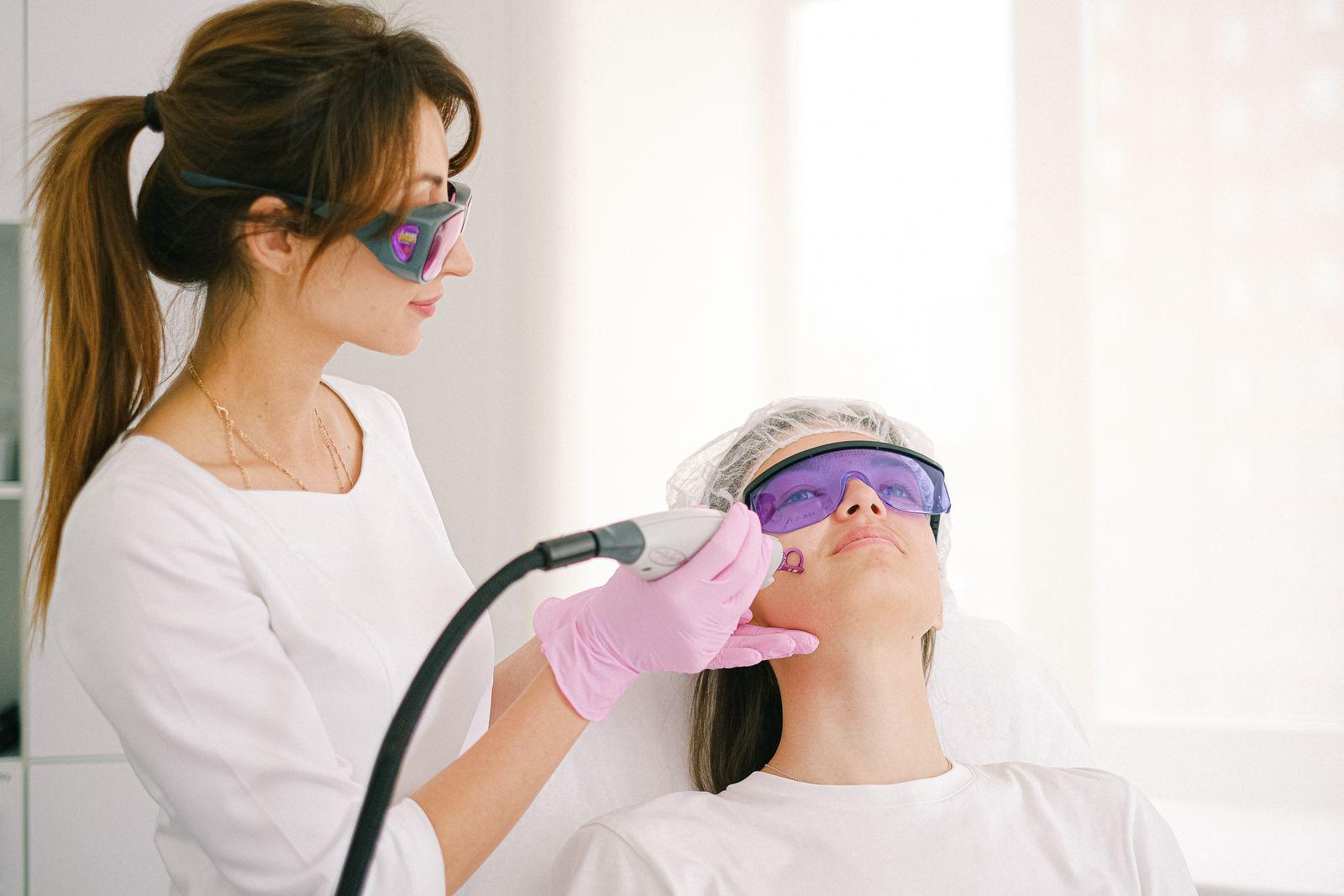
A fractional laser does not treat the whole surface of your skin. It creates microscopic columns of treated tissue and deliberately leaves healthy skin untouched between them. Those untreated bridges of skin are what drive repair, which is why recovery from fractional resurfacing is usually counted in days rather than the weeks associated with fully ablative resurfacing.
Source: Lasers in Medical Science: systematic review of ablative fractional laser trials (2025)Now installed at our Satellite Town clinic
We have added a CO2 fractional laser to the aesthetics department at Ayra Aesthetics & Dental Lounge in Satellite Town, Rawalpindi, a short drive from most of Islamabad. It is the most requested resurfacing technology in our consultations, mainly for acne scarring and skin texture, and patient feedback in the first weeks has been genuinely enthusiastic.
One honest note before anything else: we are not publishing patient photographs or treatment videos from this machine yet. Several patients have been happy with their results, but we did not take documented consent for photography or video at the time of treatment, and we will not publish anyone without it. Consented before-and-after documentation is now part of the standard treatment pathway, so the gallery on this page will fill in over the coming months with real cases rather than stock imagery.
In the meantime, this article is the information we give patients in consultation, written out in full, so you can decide whether a CO2 fractional laser is even the right conversation for your concern.
What a CO2 fractional laser actually does
A CO2 laser emits light at 10,600 nanometres, a wavelength strongly absorbed by water. Because skin is mostly water, that energy is converted to heat right at the point of contact and vaporises a very precise column of tissue. This is what makes it an ablative laser: it removes tissue rather than only heating it.
The fractional part is the important refinement. Instead of resurfacing the entire face at once, the beam is split into a grid of microscopic treatment zones. Depending on the setting, somewhere between a small percentage and a modest fraction of the surface is treated in one pass, and the untouched skin between those columns acts as a reservoir of healthy cells that repopulate the treated zones quickly.
Two things then happen. The vaporised columns trigger new epithelial coverage within days, which improves surface texture. Underneath, the residual heat stimulates a wound-healing cascade in the dermis that lays down new collagen over the following months. That second process is the slower one, and it is why the honest answer to "when will I see the result" is usually three to six months rather than three to six days.
What it treats well, and what it does not
The strongest indications are atrophic acne scars, particularly boxcar and shallow rolling scars, and general textural irregularity: rough skin surface, enlarged-looking pores, and crepey fine lines around the eyes and mouth. It is also used for surgical and traumatic scars, some stretch marks, and photoaged skin with accumulated sun damage.
In focused non-fractional mode, a CO2 laser is also an excellent tool for removing benign lesions such as skin tags, seborrhoeic keratoses, syringomas, and certain moles after clinical assessment. That is a different treatment from full-face resurfacing even though the same machine performs it.
What it is not: a melasma treatment, a first-line pigmentation treatment, or a substitute for controlling active acne. Aggressive heat can make melasma worse, and resurfacing skin that is still actively breaking out invites complications. If your main concern is dark patches on the cheeks and upper lip, the correct starting point is a melasma protocol, not a resurfacing laser.
It also will not correct deep icepick scars on its own. Those narrow, vertical scars usually need a focal technique such as TCA CROSS or punch excision first, with resurfacing used afterwards to blend the surrounding skin.
What recovery actually looks like, day by day
Expect the treatment itself to take roughly thirty to sixty minutes for a full face after topical numbing, which is applied for about an hour beforehand. Most patients describe the sensation as hot prickling with a strong burning feeling immediately afterwards that settles over the first few hours with cooling.
Days one to three are the swollen phase. The skin is red, tight, hot, and often visibly puffy, particularly around the eyes on the morning after treatment. This is expected and is managed with cool compresses, bland occlusive care, and head elevation while sleeping.
Days three to seven are the bronzing and shedding phase. The treated columns darken into a fine sandpaper-like texture and then flake off. Do not pick, scrub, or exfoliate through this. Most patients are presentable enough for work and social settings around day five to seven, which is why we usually describe social downtime as about one week rather than one day.
Weeks two to six, the skin looks pink or flushed, and that pinkness fades gradually and can be covered with mineral makeup once the surface has healed. Collagen remodelling continues quietly for three to six months after that, which is when the improvement in scar depth is judged properly.
Plan around this honestly. If you have a wedding in ten days, this is not the treatment to book. If you have a wedding in five months, the timing is excellent.
Safety on South Asian skin tones
Most of our patients in Rawalpindi and Islamabad fall into Fitzpatrick skin types IV and V. These skin types respond well to fractional resurfacing but carry a meaningfully higher risk of post-inflammatory hyperpigmentation, meaning temporary darkening of the treated area during healing. Reviews of energy-based devices in skin of colour consistently make the same recommendation: reduce density, reduce fluence, increase the number of sessions, and manage the healing phase carefully rather than pushing for a single aggressive treatment.
Our protocol reflects that. We assess your history of pigmentation after minor injuries or acne, discuss a priming phase with sun protection and, where appropriate, topical agents in the weeks before treatment, and consider a test area for higher-risk skin. Settings are chosen conservatively for the first session and adjusted at review based on how your skin actually healed, not on a fixed package.
Timing matters too. Treating in the peak of a Rawalpindi summer, when sun exposure and heat are unavoidable, is harder on healing skin than treating in the cooler months. If your schedule is flexible, autumn and winter are the easier windows.
None of this eliminates risk. Post-inflammatory hyperpigmentation, prolonged redness, infection, and, rarely, scarring are genuine possibilities with any ablative device. A clinic that describes this treatment as risk-free is not describing it accurately.
Who is not a candidate, at least not yet
We defer or decline treatment for active inflammatory acne, any active skin infection in the treatment area, a history of keloid scarring, and untreated cold sore outbreaks unless antiviral prophylaxis is started beforehand. Pregnancy and breastfeeding are also reasons to wait.
Recent isotretinoin use requires a considered discussion. The older blanket rule of waiting six to twelve months has softened in the literature, but it remains a case-by-case judgement between you and the treating dermatologist rather than something to decide from a social media post.
The other common reason we say no is expectation. If someone wants completely smooth, scar-free skin from one session, the honest answer is that no device does that. Well-selected patients typically report meaningful, visible improvement in scar depth and texture, not erasure.
How many sessions, and how they are spaced
For atrophic acne scarring, one to three sessions is a common plan, spaced roughly four to eight weeks apart so the skin has fully recovered and the previous result can be judged before the next pass. Some patients with mild texture concerns are satisfied after a single conservative session.
Comparative reviews of fractional resurfacing against needling-based techniques show both approaches produce improvement, with ablative fractional lasers generally achieving more per session at the cost of more downtime. That trade-off, more downtime for fewer sessions, is usually the real decision you are making.
We book the review appointment at the time of treatment rather than leaving it to you to call. Judging a result at three weeks and judging it at three months lead to very different, and often wrong, decisions.
What we combine it with
Scar treatment is rarely one modality. Rolling scars tethered to the underlying tissue respond to subcision before resurfacing, because releasing the tether is a mechanical problem that no laser solves. Icepick scars are usually addressed with focal TCA CROSS. Volume-deficient depressions may need filler.
Post-procedure, we often support healing with regenerative options such as PRP or exosome-based topicals applied to the freshly treated skin, and a strict barrier-repair routine. The aim is to shorten the inflammatory phase, which in darker skin types is also the phase most associated with pigmentation problems.
At Ayra Aesthetics & Dental Lounge, the resurfacing session is one step inside a mapped plan, and the plan is written at consultation with a realistic count of sessions and a realistic calendar.
Aftercare decides a large part of your result
For the first week: gentle cleansing, a bland occlusive or prescribed ointment, no actives of any kind, no scrubbing, no picking of flakes, and no makeup until the surface has closed. Sleep with your head slightly elevated for the first two nights to reduce swelling.
From week one onward: broad-spectrum sunscreen every single day, reapplied, without exception. Sun exposure during the healing window is the single most common reason a good technical result turns into a pigmentation problem. Tinted mineral sunscreens containing iron oxides are preferable because they also block visible light, which matters in strong daylight.
Resume active ingredients such as retinoids or acids only when your clinician clears it, usually a few weeks in. Restarting too early is a frequent, avoidable cause of prolonged redness.
How to decide whether this is your treatment
Ask yourself three questions. Is my main concern texture and scarring rather than pigment? Can I genuinely protect a week of social downtime and then commit to daily sun protection? Am I looking for meaningful improvement over months rather than a transformation in days? Three yes answers make you a good candidate for the conversation.
If your answer to the first question is pigment, or you cannot clear the downtime, there are better-matched options, including microneedling protocols, chemical peels, and non-ablative devices, and we will say so at consultation instead of selling you the newest machine in the building.
To discuss whether CO2 fractional resurfacing suits your skin, book a consultation and bring any photographs you have of your skin over the past year. Progress is easier to judge when there is a baseline.
Book a consultation
Need a personalized treatment plan? Talk to our team and get guidance based on your skin or dental goals.
Frequently asked questions
Is CO2 fractional laser safe for Pakistani and other South Asian skin tones?
Yes, when settings are chosen conservatively and healing is managed carefully. Darker skin types carry a higher risk of temporary post-inflammatory darkening, so we typically use lower density and fluence across more sessions, discuss a priming phase, and insist on strict daily sun protection afterwards.
How much downtime should I plan for?
Plan for about a week of social downtime. Days one to three involve redness and swelling, days three to seven involve bronzing and fine flaking, and mild pinkness can persist for a few weeks and is coverable with mineral makeup once the skin has healed.
How many sessions will I need for acne scars?
Most acne scar plans involve one to three sessions spaced four to eight weeks apart, often combined with subcision or TCA CROSS for specific scar types. The final assessment is made three to six months after the last session, once collagen remodelling has completed.
Can CO2 fractional laser treat melasma?
It is not a melasma treatment and aggressive heat can make melasma worse. Melasma is managed with photoprotection, appropriate topical therapy, and carefully selected low-energy procedures. If you have both melasma and scarring, the melasma is stabilised first.
Does it hurt?
Topical numbing cream is applied for around an hour beforehand, and most patients describe the treatment as hot prickling rather than sharp pain. A burning sensation for a few hours afterwards is normal and settles with cooling and the aftercare routine you are given.
Do you have before and after photos of your own patients?
Not published yet. Early patients were treated before we had documented photography consent in place, and we do not publish patient images without written consent. Consented documentation is now part of the treatment pathway, so genuine clinic results will be added to this page over time.
Sources
- Lasers in Medical Science (2025): comparative clinical trials of ablative fractional lasers
- Lasers in Medical Science (2023): needling techniques compared with ablative fractional laser
- Facial Plastic Surgery (2023): energy-based device treatments in skin of colour
- American Academy of Dermatology: acne scars, diagnosis and treatment
Related Articles
9 min read
Exosome Therapy for Hair Loss: A Real 3-Month Result and an Honest Look at the Evidence
What exosome therapy for hair loss involves, a genuine 3-month before and after from our Rawalpindi clinic, where the evidence currently stands, and who actually responds.
9 min read
Acne Scars: How to Match the Right Treatment to Your Scar Type
Icepick, boxcar, rolling, or just dark marks? A practical guide to identifying your acne scar type and matching it to the treatment that actually works for it.